Choosing the right Liquid Mixer Machine can shape product quality, production speed, and daily operating costs. A suitable mixer creates consistent texture, reduces waste, and handles materials without unnecessary stress. An unsuitable model may leave dry pockets, overheat sensitive ingredients, or require constant manual adjustment.
This guide presents seven practical tips for evaluating mixer performance before purchase. Consider viscosity, batch volume, mixing speed, tank design, motor power, cleaning access, and maintenance support. For example, a thick cream may need a stronger drive and slower rotation than a thin beverage base. A small tank outlet can also turn cleaning into a frustrating task. Details matter.
Real production experience often reveals problems that brochures overlook. Ask suppliers for test results, material compatibility data, and references from similar facilities. Check whether operators can reach valves, seals, and impellers safely. Confirm that replacement parts are available in your region. Do not judge a machine by horsepower alone.
A perfect machine rarely exists.
The best choice depends on your formula, workflow, budget, and future plans. Even experienced buyers can misjudge capacity when product viscosity changes during processing. Leave practical room for those changes. Reliable decisions come from comparing measurable performance with everyday usability, not from trusting impressive specifications alone. These tips will help you examine each option carefully and select equipment with greater confidence.
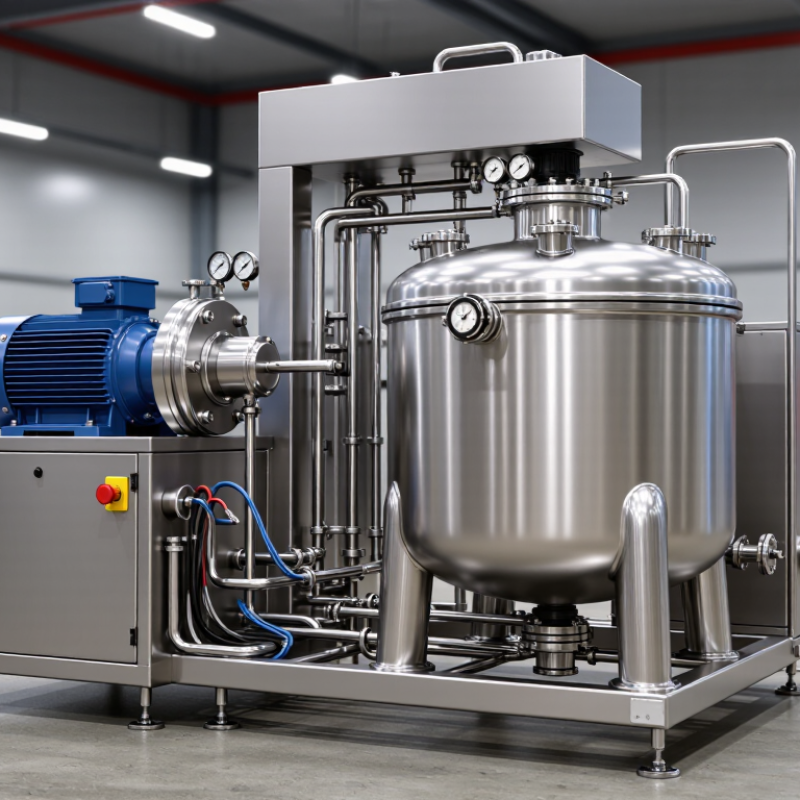
Choosing the best liquid mixer machine begins with a clear definition of your process. Measure batch volume, target mixing time, viscosity, density, temperature, and required shear. A thin cleaning solution behaves differently from a thick lotion or mineral suspension. Record whether the liquid contains abrasive particles, dissolved powders, or air-sensitive ingredients. Small details matter.
Tip 1: Describe the liquid at its hardest stage. Viscosity may rise during cooling or powder addition. Design for that condition, not the easiest one. Tip 2: Decide what “fully mixed” means. It could mean uniform color, stable solids distribution, or a measured concentration at several sampling points. Guessing here can create costly rework.
Consider vessel shape, working volume, and cleaning needs together. A mixer that performs well in a full tank may struggle at half capacity. Shaft length, impeller position, and baffle design can change circulation patterns. In practice, laboratory results sometimes look perfect, but scale-up exposes dead zones. That is easy to miss.
Tip 3: Test with a representative sample before purchasing. Check mixing time, temperature increase, foam formation, and power demand. Ask for recorded test conditions, not only attractive performance claims. Include operators in the evaluation; they often notice difficult loading, splashing, or cleaning points first. I have found that a simple trial can challenge an elegant specification. That is useful.
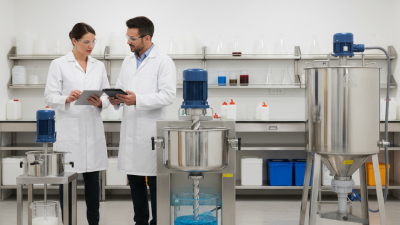
Tip 1: Match the mixer to the liquid’s viscosity and processing goal. Propeller mixers suit low-viscosity liquids, such as water-based solutions, where fast circulation matters. Turbine mixers provide stronger flow and better gas dispersion in tanks containing solvents or diluted chemicals. They can also create more turbulence than necessary. Test carefully.
Tip 2: Choose shear based on the product’s structure. Rotor-stator mixers create intense shear for emulsions, fine dispersions, and rapid powder wetting. Paddle mixers move fragile liquids gently and reduce unnecessary foaming. Anchor mixers work well with thick products, especially when wall scraping and heat transfer are important. I have seen operators select high shear too quickly, then damage the product texture.
Tip 3: Compare batch volume, tank shape, and cleaning requirements before purchasing. A small impeller may leave dead zones near corners or the tank bottom. Multiple impellers can improve circulation in tall vessels, but they increase power use and maintenance. Check torque, speed control, shaft sealing, and material compatibility with actual process conditions. Ask for test data using your liquid, not only water. Temperature changes can alter viscosity dramatically, so testing at operating temperature is essential. Expect some uncertainty. Real production rarely behaves exactly like a laboratory sample.
Choosing a liquid mixer starts with the batch, not the machine’s appearance.
Tip 1: Measure your normal, minimum, and maximum batch volumes. A vessel that is too large can mix poorly at low levels.
Tip 2: Check working capacity, not only total tank capacity. Leave enough headspace to prevent splashing and air intake.
Tip 3: Match the mixer speed with liquid viscosity. Thin liquids often need faster circulation, while thick liquids may require stronger torque. Speed alone proves little.
Tip 4: Request the operating speed range and torque data. A variable-speed drive gives better control during changing formulations.
Tip 5: Observe the mixing pattern inside the tank. A good mixer should reduce dead zones, floating layers, and sediment near the bottom.
Tip 6: Ask about impeller design and shaft position. These details affect circulation, shear, and heat distribution. Small differences matter.
Tip 7: Test the machine with a liquid similar to your real product. Check blend time, temperature changes, foam formation, and cleaning access.
In practical evaluations, a short test can reveal problems that specifications hide. I once focused too heavily on rated speed and overlooked uneven mixing near the tank wall. That mistake was expensive in time, though not impossible to correct. Reliable suppliers should provide clear performance data, safe operating guidance, and test records rather than vague promises.
7 Tips to Choose the Best Liquid Mixer Machine
Choosing a liquid mixer machine starts with the product, not the motor. Contact parts should use traceable, corrosion-resistant stainless steel, commonly 316L for demanding formulations. Request material certificates, weld-finish records, and gasket compatibility data. A shiny tank can still hide rough welds or dead zones. That is an easy mistake. The WHO Global Food Safety Report estimates that contaminated food causes 600 million illnesses and 420,000 deaths annually. Hygiene is not decorative. Choose drainable vessels, smooth internal joints, hygienic seals, and practical tool-free access. Surface roughness near 0.8 micrometres is widely referenced in 3-A sanitary equipment guidance, but the complete design matters more than one number.
Safety features should be tested, not merely listed. Select interlocked covers, emergency stops, overload protection, and guarded shafts. ISO 12100 recommends systematic machinery risk assessment, while ISO 13849-1 addresses safety-related control systems. Ask what happens after a power failure. Does the impeller stop safely? Can an operator restart it unexpectedly? Never assume a certificate replaces a site-specific safety review.
Maintenance determines whether performance survives production. Look for removable seals, inspection ports, accessible bearings, lubrication instructions, spare-parts identification, and documented cleaning procedures. The FDA Food Code requires food-contact equipment to remain corrosion-resistant, cleanable, and in good repair. In practice, operators may skip difficult cleaning steps. That weakness should influence the purchase. A slightly simpler mixer can be the safer long-term choice.
| Tip | Key Selection Dimension | Recommended Specification or Practice | What to Check Before Purchase | Why It Matters | Warning Signs |
|---|---|---|---|---|---|
| 1. Select suitable contact materials | Product-contact construction | Use corrosion-resistant stainless steel suitable for the liquid, commonly stainless steel grades selected according to the product chemistry. For chloride-rich, acidic, or highly corrosive liquids, confirm material compatibility with the supplier or a qualified materials engineer. | Request the material specification, surface-finish information, weld details, and compatibility data for the actual liquid, temperature, and concentration. | Correct material selection helps reduce corrosion, contamination, metallic migration, and premature equipment failure. | Unidentified metal grades, peeling coatings, visible rust, or materials that are incompatible with acids, salts, solvents, or cleaning chemicals. |
| 2. Prioritize hygienic design | Cleanability and sanitary construction | Choose smooth, drainable product-contact surfaces with continuous welds, minimal crevices, and no unnecessary dead legs. Components should be accessible for inspection and cleaning. | Inspect weld quality, internal corners, shaft seals, gaskets, outlet areas, and the lowest drain point. Confirm whether the machine supports the required cleaning method. | Good hygienic design limits residue buildup and lowers the risk of microbial growth or cross-batch contamination. | Rough welds, trapped liquid, difficult-to-reach surfaces, exposed threads in the product zone, or poorly sealed joints. |
| 3. Match the mixer to the liquid | Viscosity, density, solids, and shear requirement | Select the impeller or mixing element and motor capacity according to viscosity, density, solids content, batch volume, and the required degree of blending, suspension, dispersion, or emulsification. | Provide the supplier with minimum and maximum viscosity, operating temperature, density, solids percentage, batch size, and target mixing time. Ask for performance data or a process test when possible. | A mixer that is too small may leave unmixed zones, while an oversized or overly aggressive mixer can waste energy, damage sensitive ingredients, or create excessive foaming. | Choosing only by motor power, without reviewing viscosity, tank geometry, impeller type, or required mixing results. |
| 4. Verify speed control and process monitoring | Variable-speed operation and instrumentation | Use adjustable speed when the process includes different products, viscosities, filling levels, or mixing stages. Consider monitoring for speed, temperature, level, torque, or power consumption when process control requires it. | Confirm the speed range, control method, overload protection, sensor compatibility, display accuracy, and integration requirements for the operating environment. | Controlled speed improves repeatability and allows operators to balance mixing performance, shear, foaming, and energy use. | Fixed-speed operation for variable products, unstable speed under load, missing overload protection, or controls that are difficult to clean or operate. |
| 5. Check operator and equipment safety | Guarding, interlocks, electrical protection, and pressure control | Provide guards around rotating parts, emergency-stop functions where required, safe access, appropriate electrical protection, and interlocks that prevent operation when covers or access points are open. For sealed tanks, verify pressure and vacuum protection. | Review the risk assessment, electrical enclosure rating, grounding, emergency-stop arrangement, rotating-shaft guarding, access-door interlocks, and pressure-relief provisions. | These features help prevent entanglement, unexpected startup, electrical hazards, overpressure, and damage caused by operating errors. | Exposed rotating shafts, bypassable safety devices, unclear emergency controls, unprotected wiring, or sealed vessels without suitable pressure protection. |
| 6. Evaluate maintenance and spare-part access | Serviceability, seals, bearings, and replacement parts | Choose a design that allows practical access to seals, bearings, couplings, motors, impellers, valves, and instrumentation. Keep critical spare parts and maintenance instructions available. | Ask for a preventive-maintenance schedule, lubrication requirements, seal-replacement procedure, recommended spare-parts list, component life expectations, and service access clearances. | Easy maintenance reduces downtime, supports reliable operation, and helps prevent leaks, vibration, and unexpected repairs. | Special tools required for routine service, inaccessible wear parts, unavailable seals, unclear lubrication requirements, or no maintenance documentation. |
| 7. Confirm installation, testing, and total operating cost | Fit, commissioning, energy use, and lifecycle value | Check tank dimensions, nozzle locations, electrical supply, floor loading, drainage, ventilation, noise, cleaning utilities, and production capacity. Use acceptance testing to verify mixing time, uniformity, leakage, vibration, and safety functions. | Compare rated power, expected duty cycle, cleaning consumption, installation requirements, warranty terms, training, documentation, and measurable performance results under representative conditions. | A machine with a suitable purchase price may still be costly if it consumes excess energy, requires frequent cleaning, or cannot meet the required batch consistency. | Unverified capacity claims, no site-fit review, excessive vibration or noise during testing, unclear utility requirements, or missing acceptance criteria. |
Selection note: Final specifications should be confirmed against the actual liquid properties, batch size, operating temperature, cleaning procedure, applicable workplace-safety requirements, and process-validation criteria.
7 Tips to Choose the Best Liquid Mixer Machine
Energy use deserves more attention than the motor’s nameplate rating. The International Energy Agency’s Energy Efficiency 2023 report states that industry consumed about 37% of global final energy in 2022. A mixer running eight hours daily can quietly become a major operating expense. Compare motor efficiency, variable-speed control, batch time, and power demand at actual viscosity. U.S. Department of Energy motor-system guidance also identifies motor-driven equipment as a significant share of industrial electricity use. Ask suppliers for measured operating data, not only catalog figures. Small details matter.
Supplier support affects production stability. Request installation guidance, spare-parts availability, response times, and technician training. A low purchase price may become expensive when a seal fails during a weekend shutdown. Review warranty conditions carefully. Check whether preventive-maintenance instructions include shaft alignment, bearing inspection, and cleaning procedures. Practical support should be documented.
Calculate total cost of ownership over the machine’s expected service life. Include purchase price, installation, electricity, maintenance, replacement parts, downtime, and disposal. ISO 15686-5 provides a recognized framework for life-cycle costing, although it does not remove the need for plant-specific assumptions. Be honest about uncertainty. A spreadsheet can still lie when viscosity changes seasonally or operators use different batch sizes. Test the mixer with representative materials before signing. The best choice may not be the most efficient model on paper.